Wi-Fi 7 in 2025: Adoption, Real-World Impact, and What’s Next
For more than two decades, Wi-Fi has quietly evolved from a convenience technology into a mission-critical utility. Now we’re in 2026, we can look back at 2025 and review wireless connectivity which underpinned nearly every digital experience: from enterprise productivity and cloud services to healthcare, education, retail, manufacturing, and smart infrastructure. Against this backdrop, Wi-Fi 7 (IEEE 802.11be) has emerged as the most ambitious leap forward yet.
But as with every new wireless generation, the real story of Wi-Fi 7 in 2025 was not just about theoretical speeds or marketing headlines. It was about adoption, operational reality, and practical impact, and what IT engineers needed to understand as networks transitioned from Wi-Fi 6/6E into the next era.
What Makes Wi-Fi 7 Different? A Quick Recap
Wi-Fi 7 builds directly on the foundations laid by Wi-Fi 6 and 6E, but introduces several transformative enhancements designed for high-density, low-latency, and high-reliability environments.
Key technical advancements include:
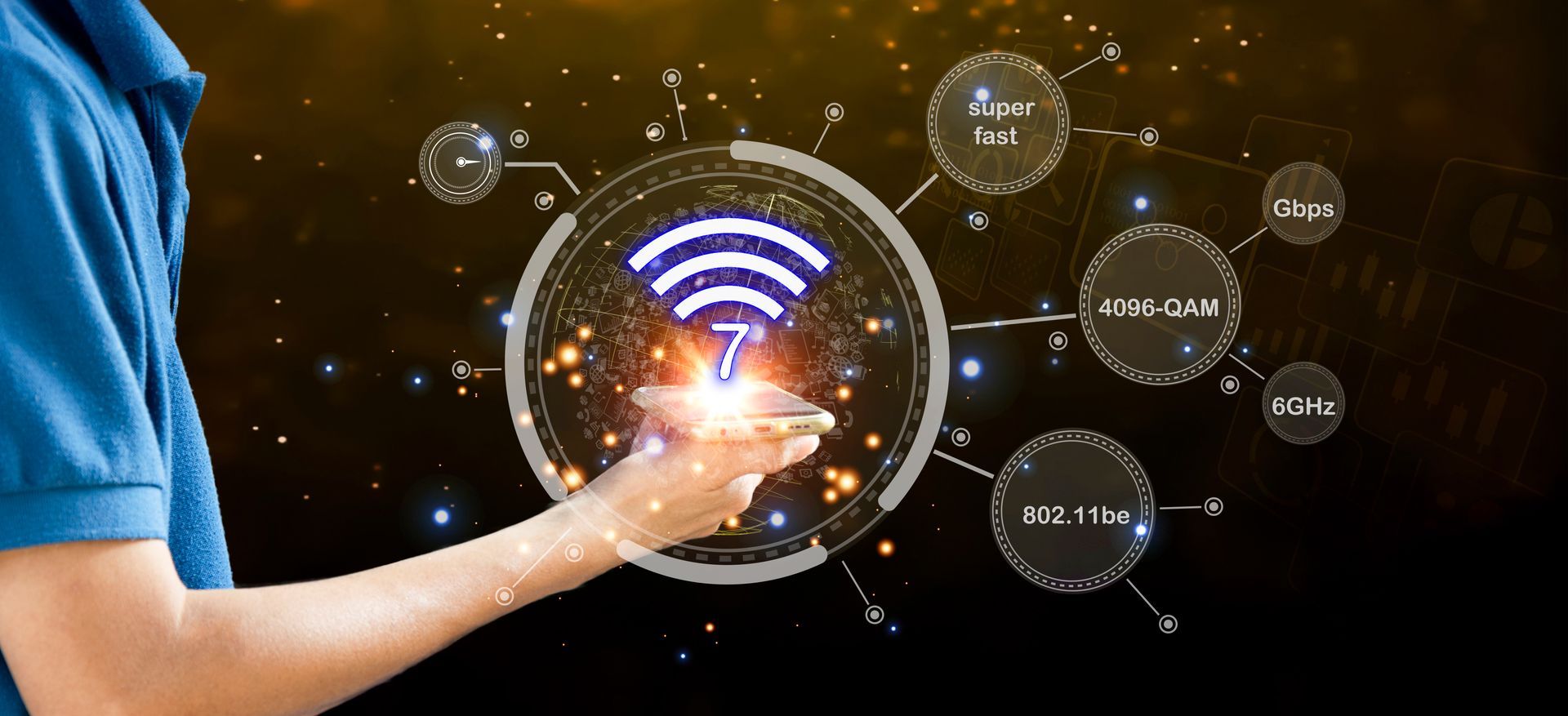
- 320 MHz channel widths in the 6 GHz band, doubling available bandwidth compared to Wi-Fi 6E
- Multi-Link Operation (MLO), allowing devices to transmit and receive data simultaneously across multiple frequency bands
- 4096-QAM (4K-QAM) modulation, increasing peak data rates
- Deterministic latency improvements, critical for real-time applications such as AR/VR, industrial automation, and immersive collaboration
On paper, Wi-Fi 7 promised multi-gigabit throughput, lower jitter, and improved consistency, especially in congested environments. But the question engineers asked throughout 2025 was simple: how much of this translates into real-world value?
Wi-Fi 7 Adoption in 2025: Where We Really Are
By the end of 2025, Wi-Fi 7 adoption can best be described as strategic, rather than universal.
Enterprise Uptake
Enterprises have largely taken a measured approach. Early adoption has been strongest in environments where performance guarantees mattered more than raw speed:
- Large campuses and high-density offices
- Healthcare and clinical settings
- Higher education lecture halls and dormitories
- Manufacturing floors with time-sensitive systems
- Event venues and stadiums
For these organizations, Wi-Fi 7’s ability to deliver predictable performance under load, rather than speeds, has been the real driver.
Consumer and SMB Adoption
On the consumer side, Wi-Fi 7 routers and devices became widely available in 2025, but adoption has been uneven. Many households still rely on Wi-Fi 6 or 6E, which remains “good enough” for typical usage.
Small and medium businesses, meanwhile, often waited for price stabilization and proven interoperability before upgrading.
This mirrors the pattern seen with previous Wi-Fi generations: the technology matures, first, in demanding enterprise use cases before trickling down.

The Real-World Impact: Beyond Speed Tests
One of the most important lessons of Wi-Fi 7 in 2025 was that speed is no longer the primary metric of success.
Multi-Link Operation Changes Everything
MLO has quietly become Wi-Fi 7’s most impactful feature. By enabling simultaneous use of multiple bands, such as 5 GHz and 6 GHz, networks gain:
- Improved reliability through path diversity
- Reduced latency during interference events
- Smoother roaming experiences for mobile devices
In practice, this means fewer “mystery drops,” more stable voice and video calls, and better performance in RF-challenged environments which are outcomes that deeply matter to IT teams and end-users alike.
Latency Becomes the New KPI
Applications in 2025 increasingly demanded consistent, low latency, rather than peak throughput:
- Cloud-hosted desktops
- Extended reality (XR) and spatial computing
- Real-time collaboration tools
- Industrial IoT and robotics
Wi-Fi 7’s deterministic improvements, especially when paired with modern wired backhaul, have made wireless viable for workloads that were once considered for wired-only.

Infrastructure Reality Check: The Hidden Costs of Wi-Fi 7
Despite its promise, Wi-Fi 7 adoption has brought some hard truths about infrastructure readiness to the surface.
Backhaul Bottlenecks
Many organizations discovered that upgrading APs alone was insufficient. They learned that multi-gigabit wireless quickly exposes weaknesses in:
- Legacy switching infrastructure
- Insufficient PoE budgets
- Outdated cabling
In 2025, successful Wi-Fi 7 deployments were typically accompanied by 2.5/5/10 GbE upgrades, modern power delivery, and careful RF design.
Design Complexity Increases
With wider channels and multi-link behavior, RF design has become more complex, not simpler. Engineers must now consider:
- Channel reuse strategies in 6 GHz
- Coexistence with Wi-Fi 6E networks
- Client capability mismatches
- Spectrum availability and regulatory constraints
This has elevated the importance of professional wireless design and analysis skills.

Security in the Wi-Fi 7 Era
From a security perspective, Wi-Fi 7 continues the industry’s shift toward secure-by-default networking.
- WPA3 adoption has become mainstream in enterprise environments
- Opportunistic Wireless Encryption (OWE) is increasingly common for open networks
- Device onboarding and identity-based access control are now expected, not optional
Wi-Fi 7 itself did not introduce radically new security mechanisms, but its adoption has coincided with a broader recognition: performance without security is “operational risk”.
As wireless networks carry more sensitive and mission-critical traffic, security expertise is inseparable from performance expertise.
What Wi-Fi 7 Has Changed for IT Engineers
Perhaps the most significant impact of Wi-Fi 7 in 2025 is how it has reshaped expectations of wireless professionals.
Wireless Is No Longer “Best Effort”
Organizations now expect wireless networks to deliver predictable, engineered outcomes. This shifts the role of the Wi-Fi engineer from installer to architect, analyst, and strategist.
Deeper RF Knowledge Is Essential
Features like MLO and 320 MHz channels demand a solid understanding of RF behavior, spectrum planning, and protocol interactions. Troubleshooting increasingly requires packet analysis and performance modeling, not guesswork.
Certifications and Structured Learning Matter More
As complexity increases, many engineers are turning to formal wireless certification pathways to stay current. Vendor-neutral programs such as CWNP provide deep coverage of RF fundamentals, design, security, and analysis, while foundational certifications like CompTIA Network+ and Security+ ensure engineers understand how wireless integrates into the broader IT ecosystem.

Lessons Learned from 2025 Deployments
By the end of 2025, several clear lessons had emerged:
- Wi-Fi 7 delivers its greatest value in high-density and latency-sensitive environments
- Infrastructure readiness matters more than access point selection
- Design and analysis skills are the primary success factors
- Backward compatibility remains a challenge during transition periods
- Wireless expertise is increasingly a strategic capability, not an operational afterthought
These lessons will shape enterprise wireless strategy for years to come.
Looking Ahead: What Comes After Wi-Fi 7?
Even as Wi-Fi 7 gains momentum, early industry discussions are already forming around Wi-Fi 8 (802.11bn) and beyond. The focus appears to be less about raw speed and more about:
- Extreme reliability
- Ultra-low latency
- Deterministic performance guarantees
- Seamless coexistence with cellular and private 5G
For IT professionals, this reinforces a key truth: wireless evolution is accelerating, not slowing down.
Wrapping It All Up
Wi-Fi 7 in 2025 represented a pivotal moment in the evolution of wireless networking. While its technical capabilities were/are impressive, its true significance lies in how it has shifted expectations from best-effort connectivity to engineered, performance-driven wireless infrastructure.
For organizations, Wi-Fi 7 is a strategic enabler. For IT engineers, it is both an opportunity and a challenge: an opportunity to lead next-generation connectivity initiatives, and a challenge to deepen skills in RF design, security, and analysis.
As wireless continues to underpin nearly every digital experience, one thing is clear: the future of IT is wireless, and Wi-Fi 7 is just the beginning of its next phase...
===
===
Learn More
If you want to learn more about our wireless training and wireless networks, visit our training portfolio page here
===
#WiFi #WirelessNetworks
===
About NC-Expert
NC-Expert is a privately-held California corporation and is well established within the Wireless, Security, and CyberSecurity industry certification training, courseware development, and consulting markets.
NC-Expert has won numerous private contracts with Fortune level companies around the world. These customers have depended on NC-Expert to train, advise, and mentor their staff.
So remember, if you are looking for the best IT training just call us at (855) 941-2121 or contact us
NC-Expert Blog