Quantum Computing and AI: the Future
Quantum Computing and AI
Quantum computing is no longer the stuff of science fiction. With advancements accelerating in recent years, it is poised to revolutionize various fields, from cryptography to drug discovery.
Most of us have seen at least one of the many apocalyptic-style movies, where the world is taken over by superintelligent machines. In the next years we may see the myth start to become the reality... or will we?
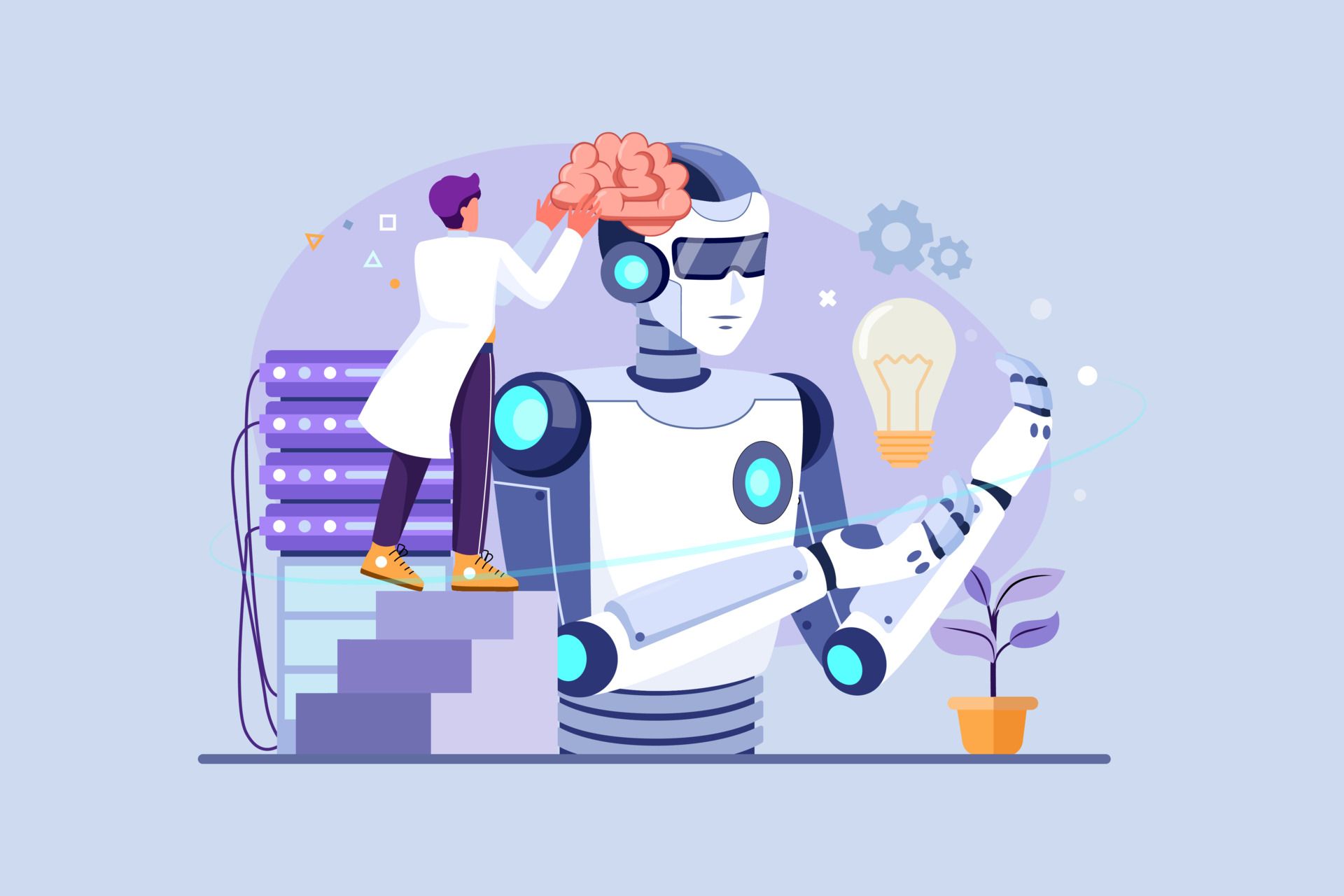
One of the most exciting prospects for the future of computer technology lies in the intersection of quantum computing and artificial intelligence (AI). While AI has made incredible strides over the past decade, quantum computing holds the potential to unlock new possibilities that could catapult AI into a new era of capabilities.
Understanding Quantum Computing
At its core, quantum computing harnesses the principles of quantum mechanics (specifically, superposition and entanglement) to process information in fundamentally different ways than classical computers.
Unlike classical bits, which represent data as either 0 or 1, quantum bits (qubits) can exist in multiple states simultaneously, thanks to superposition. Moreover, qubits can be entangled, meaning the state of one qubit can be instantaneously linked to another, regardless of distance. This opens up the potential for parallelism and exponential computational power.
Where classical computers process information sequentially, quantum computers can perform many calculations at once. This ability allows them to tackle problems that are currently deemed incredibly difficult for even the most powerful classical supercomputers.
How Quantum Computing Can Transform AI
AI, particularly machine learning (ML), relies on processing vast amounts of data to recognize patterns, make predictions, and optimize decision-making.
However, the computational demands of training complex models often require immense processing power. Classical computers have limitations in handling the vast amounts of data and intricate algorithms that modern AI techniques require.
This is where quantum computing comes into its own. With its ability to perform multiple calculations simultaneously, quantum computers could significantly speed up AI training and optimization.
Quantum computing could enhance neural networks, the backbone of deep learning, by allowing for faster and more efficient training. This could lead to breakthroughs in areas like natural language processing (NLP), computer vision, and reinforcement learning. It could also provide a more efficient way to explore the common challenges found in optimization problems such as supply chain management, drug design, and financial modeling.
The Challenges Ahead
Despite its potential, quantum computing is still in its early stages. Building a scalable, reliable quantum computer that can outperform classical computers in real-world applications remains as a huge challenge.
Current quantum computers are highly sensitive to noise and errors. In addition, quantum algorithms are still being developed and practical general-purpose quantum AI applications are not yet a reality.
Researchers are exploring hybrid approaches that combine quantum and classical computing, using quantum systems to handle specific tasks while relying on classical systems for others. This could be a promising way to gradually integrate quantum computing into AI workflows.
A Quantum Leap for AI
Looking forward, the integration of quantum computing and AI could open up new frontiers in science and technology. In time, AI might develop the capacity to predict our likes, dislikes, and may be able to help advertisers market their products and solutions. It may be trained to spot the nuances of developing health issues from scans and other data, faster than humans. It might be able to determine more efficient methods of manufacture that will improve efficiency.
Quantum-powered AI could accelerate drug discovery by simulating molecular interactions at a level of detail that classical computers cannot achieve. In materials science, it could help design new materials with specific properties, potentially leading to breakthroughs in energy storage, electronics, and manufacturing.
There are so many areas where quantum computing combined with AI could propel our knowledge and our capabilities into the future, and help improve society and our lives faster than we could otherwise have done, but we are not quite at that point... yet.
Bringing it All Together... and Into The Future
it’s time for a reality check: at this point in time, Quantum computers are prohibitively expensive and will likely only be owned by governments and huge corporations. AI is still in its infancy.
But, even though both AI and quantum computing are relatively new technological concepts, the possibilities they offer together are immense. As quantum technology matures, we are likely to see rapid progress in AI capabilities, with quantum computers unlocking new levels of performance and innovation.
The future of humanity could very well be inextricably intertwined with AI in the quantum sphere.
===
How We Can Help
We provide either standard industry training classes or can customize a program to suit your specific needs and budget. Our trainings are always delivered by certified, expert instructors, virtually/online in real time.
You can view our AI Training portfolio here:
https://www.nc-expert.com/training-classes-by-vendor/ai-training
You are welcome to enroll individual employees into our public classes. We can accommodate private groups virtually or in person at your site. Contact us for details.
You are welcome to visit our website homepage:
https://www.nc-expert.com/
===
About NC-Expert
NC-Expert is a privately-held California corporation and is well established within the professional IT industry certification training, courseware development, and consulting markets.
NC-Expert has won numerous private contracts with Fortune level companies around the world. These customers depend on NC-Expert to train, advise, and mentor their staff.
If you are looking for the best in IT industry training then call us at
(855) 941-2121 or sales@nc-expert.com today.
NC-Expert Blog